
The short answer: choose luxury vinyl plank (LVP) if moisture is any concern — kitchens, bathrooms, basements, homes with pets. Choose laminate if you want the most realistic wood look and feel for the lowest price in dry areas like bedrooms and living rooms. LVP is 100% waterproof; standard laminate is not. In Kansas City’s humid summers and wet springs, that single difference settles the debate for most rooms below grade.
We install both every week across Lenexa, Overland Park, and the KC metro at Star Flooring LLC. Here’s the honest comparison we give customers in our showroom.
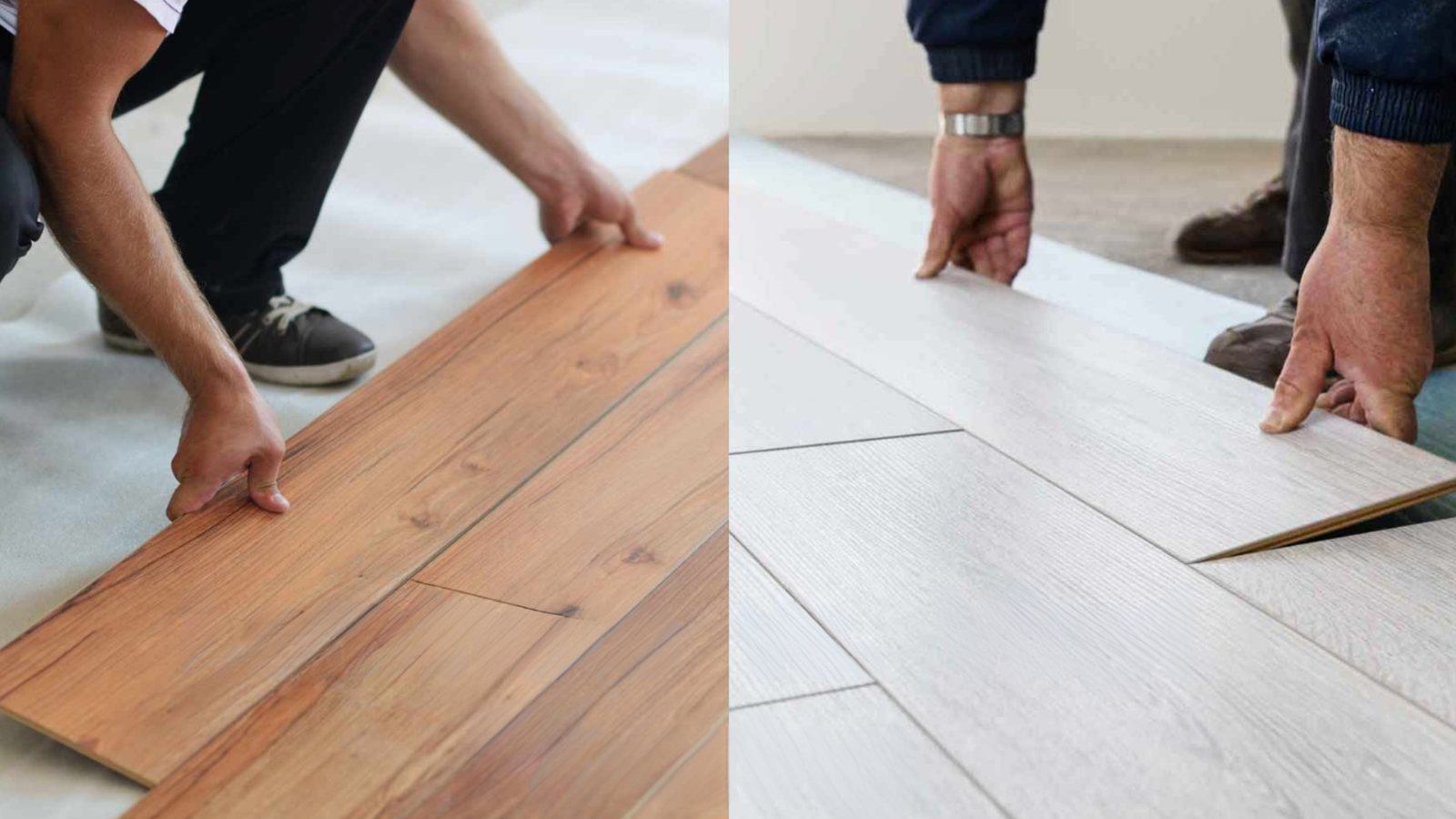
LVP vs Laminate at a Glance
| Factor | Luxury Vinyl Plank (LVP) | Laminate |
|---|---|---|
| Water resistance | 100% waterproof | Water-resistant at best; swells if soaked |
| Cost installed (KC metro) | $4 – $7 / sq ft | $3 – $6 / sq ft |
| Feel underfoot | Softer, quieter, warmer | Harder, more “clicky” without good underlayment |
| Realism | Very good; best at mid–high price points | Excellent embossed wood texture |
| Durability | Scratch-resistant wear layer (12–22 mil) | Very hard AC-rated surface, resists dents |
| Lifespan | 10 – 20 years | 15 – 25 years |
| Pets & kids | Excellent | Good (accidents must be wiped fast) |
| Basements | Yes | Not recommended |
| Repairability | Single planks replaceable | Single planks replaceable |
| Resale impact | Neutral–positive | Neutral |
What’s the Real Difference Between LVP and Laminate?
Both are floating click-lock floors that mimic hardwood. The difference is what they’re made of.
LVP is plastic through and through — a vinyl core (often stone-polymer “SPC” or wood-polymer “WPC”) with a printed layer and clear wear layer. Water can sit on it for days without damage.
Laminate is mostly wood — a high-density fiberboard (HDF) core with a photographic layer and a hard melamine top coat. That wood core is why laminate feels more solid underfoot, and why it swells when water gets into the seams.
When Is LVP the Better Choice?
- Kitchens, bathrooms, laundry rooms, basements. Waterproof means a dishwasher leak is a mop-up, not a replacement.
- Homes with dogs. Between the waterproof core and thick wear layers, LVP is the floor we recommend most for pet owners — see our full guide to the best flooring for homes with pets and kids.
- Kansas City basements specifically. Concrete slabs wick moisture; an LVP with attached pad handles it. Laminate over concrete is a swelling claim waiting to happen.
- Quieter rooms. LVP absorbs sound better, useful in second-story bedrooms and condos.
Browse styles and wear-layer options on our luxury vinyl plank flooring service page.
When Is Laminate the Better Choice?
- Maximum realism per dollar. Mid-range laminate often looks and feels more like real wood than mid-range LVP, thanks to deeper embossing.
- Dry, high-traffic spaces. Living rooms, hallways, bedrooms — the hard melamine surface shrugs off chair legs and toy traffic better than entry-level vinyl.
- Tighter budgets. Quality laminate starts around $3/sq ft installed in the KC market.
- Heavy furniture. Laminate’s dense core resists denting under pianos and packed bookcases better than soft-core vinyl.
Our laminate flooring installation team carries water-resistant laminate lines that narrow the gap with LVP — worth seeing in person if you love the laminate feel but worry about spills.
How Does Kansas City’s Climate Change the Answer?
Humid 95° summers and dry 10° winters make floors expand and contract. Both products handle this better than solid hardwood, but there’s a nuance: HDF-core laminate responds to *humidity* (not just liquid water), while SPC-core LVP is nearly immune to both. If your home doesn’t run consistent climate control year-round — or the floor is going in a basement or rental — LVP is the lower-risk choice in our climate. We cover this in depth in how to choose flooring for humid Midwest weather.
What Do They Cost in Kansas City?
| Factor | LVP | Laminate |
|---|---|---|
| Materials | $2 – $5 / sq ft | $1.50 – $4 / sq ft |
| Installation | $1.50 – $2.50 / sq ft | $1.50 – $2 / sq ft |
| Total installed | $4 – $7 / sq ft | $3 – $6 / sq ft |
| 500 sq ft project | $2,000 – $3,500 | $1,500 – $3,000 |
Both need a flat subfloor; both go down fast (most rooms in a day). If existing floors are damaged, factor in repair or tear-out — our floor repair services can tell you whether the subfloor underneath is install-ready.
Our Verdict, Room by Room
- Kitchen / bathroom / laundry: LVP, no contest.
- Basement:
- Living room / hallway: Either — laminate if you prioritize feel, LVP if pets rule the house.
- Bedrooms: Laminate for warmth of feel and price; LVP if upstairs noise matters.
- Whole-house single product: LVP — one waterproof floor everywhere beats managing two materials.
Still comparing against real wood? Read LVP vs Hardwood next.
FAQ
Is LVP better than laminate?
For moisture-prone rooms, yes — LVP is fully waterproof while laminate’s wood core swells when wet. For dry rooms, laminate offers a harder, often more realistic surface for less money. Neither is “better” everywhere; the room decides.
Which lasts longer, LVP or laminate?
Quality laminate typically lasts 15–25 years versus 10–20 for LVP, in dry conditions. In kitchens, baths, and basements, LVP outlasts laminate because water — not wear — is what kills laminate floors.
Which is better for dogs, LVP or laminate?
LVP. Accidents and water-bowl spills can’t penetrate it, and 20-mil wear layers resist claw scratches. Laminate works only if spills are wiped quickly.
Can you put laminate in a basement in Kansas City?
We don’t recommend it. Concrete slabs in KC basements carry moisture that HDF cores absorb over time. Use SPC-core LVP with a vapor-appropriate underlayment instead.
Does LVP or laminate add more home value?
Roughly equal — both read as “updated” to buyers but neither carries hardwood’s resale premium. Condition and consistent flooring throughout matter more than which of the two you pick.