
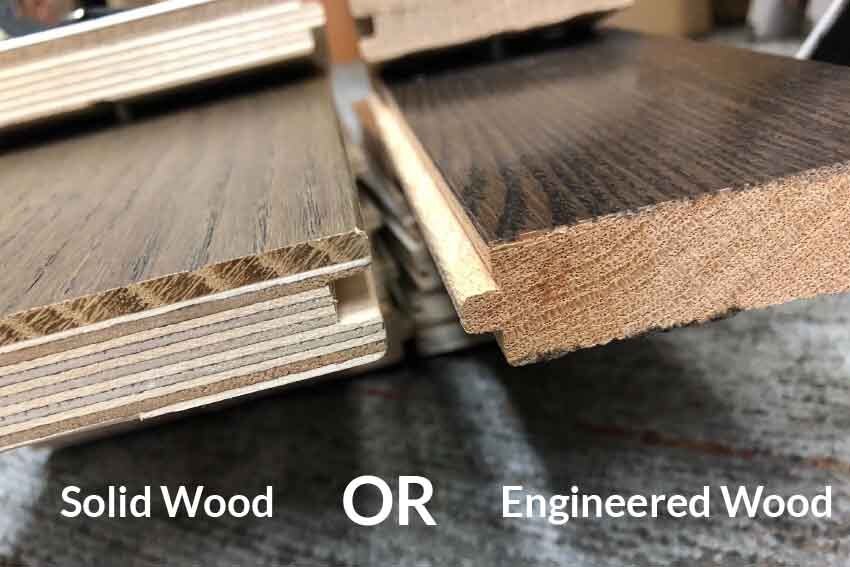
Both are 100% real wood on the surface — the difference is underneath. Solid hardwood is one piece of wood top to bottom; engineered hardwood is a real-wood veneer over a plywood core. Choose solid for maximum lifespan and refinishing potential on main and upper floors. Choose engineered for basements, concrete slabs, and Kansas City’s humidity swings — and to save $1–$3 per square foot.
After 12+ years installing both across Lenexa, Overland Park, and Johnson County, here’s how we help homeowners decide at Star Flooring LLC.
Engineered vs Solid Hardwood at a Glance
| Factor | Solid Hardwood | Engineered Hardwood |
|---|---|---|
| Construction | Single piece of wood (¾” typical) | Real wood veneer (2–6 mm) over plywood core |
| Cost installed (KC metro) | $7 – $12+ / sq ft | $6 – $9 / sq ft |
| Lifespan | 50 – 100 years | 20 – 40 years |
| Refinishing | 4 – 6 times | 1 – 2 times (3 mm+ veneer); thin veneers: never |
| Humidity response | Expands/contracts; can gap or cup | Far more stable |
| Below grade (basements) | No | Yes |
| Over concrete slab | Difficult (needs sleepers/plywood) | Yes — glue or float |
| Over radiant heat | Usually no | Often yes |
| Install methods | Nail-down | Nail, glue, or float |
| Resale perception | Premium | Equal to solid in most listings (“hardwood floors”) |
What’s the Actual Difference in Construction?
A solid oak plank is exactly that — milled from one board. It’s why a 100-year-old home in Brookside can have its original floors sanded back to new.
Engineered hardwood bonds a slice of real oak, maple, or hickory to cross-laid plywood layers. The cross-grain construction is the point: wood expands across the grain, and the alternating layers cancel most of that movement out. Once installed, the two are visually identical — same species, same stains, same finishes. Nobody can tell from standing height.
We install both — see species, widths, and finish options on our hardwood flooring installation page.
Why Does This Matter So Much in Kansas City?
Kansas City swings from muggy 90° summers to furnace-dry winters. Solid hardwood responds: boards swell in July and shrink in January, which is why we acclimate planks on-site and test moisture before every install. Managed properly, solid hardwood performs beautifully here on main and upper levels — thousands of Johnson County homes prove it.
But two situations tilt the field hard toward engineered:
- Concrete slabs and basements. Solid hardwood can’t be nailed to concrete and shouldn’t live below grade. Engineered can be glued or floated right over a slab with a moisture barrier.
- Inconsistent climate control. Rentals, vacation schedules, finished basements with humidity spikes — engineered’s stability forgives what solid won’t. For maintenance specifics, see our hardwood maintenance guide for Kansas weather.
What Do They Cost in Kansas City in 2026?
| Factor | Solid Hardwood | Engineered Hardwood |
|---|---|---|
| Materials | $3 – $8 / sq ft | $3 – $7 / sq ft |
| Installation | $3 – $5 / sq ft | $2.50 – $4 / sq ft |
| Total installed | $7 – $12+ / sq ft | $6 – $9 / sq ft |
| 1,000 sq ft project | $7,000 – $12,000+ | $6,000 – $9,000 |
Premium engineered lines with thick veneers can cost as much as solid — you’re paying for stability, not less wood quality. Full pricing breakdown in our Kansas City hardwood flooring cost guide.
The Refinishing Question — Where Solid Wins Long-Term
Solid hardwood’s ¾” thickness allows 4–6 full sandings over its life. Buy it once at 35 and it outlives your mortgage, your kids’ childhoods, and probably you.
Engineered can be refinished only as many times as its veneer allows: a 3–4 mm veneer takes 1–2 careful sandings; budget lines with 1–2 mm veneers can’t be sanded at all — damage means replacement. If your engineered floor is scratched but the veneer is thick enough, our hardwood floor refinishing service can assess it before you assume the worst. Isolated damage on either type is often fixable through board-level floor repair rather than refinishing.
Which Should You Choose?
- Forever home, main/upper floors: The refinishing headroom is unbeatable value over 30+ years.
- Basement, slab foundation, or radiant heat: Engineered — it’s the only real-wood option.
- Selling within 10 years: Listings say “hardwood floors” either way; keep the $1,000–$3,000 difference.
- Pets and heavy traffic: Either, with a hard species (hickory, white oak) and quality finish — or consider the comparison in LVP vs Hardwood if scratches keep you up at night.
- Wide planks (6″+): Wide solid planks gap noticeably in KC winters.
Not sure? Bring your floor plan to our Lenexa showroom or book a design consultation — we’ll match construction type to each room. Free estimates, always.
FAQ
Is engineered hardwood real wood?
Yes. The surface is a genuine hardwood veneer — same species and finishes as solid. Only the core (cross-laid plywood) differs, which is what makes it more stable.
Is engineered hardwood cheaper than solid?
Usually $1–$3 less per square foot installed in Kansas City ($6–$9 vs $7–$12+). Premium thick-veneer engineered can match solid pricing.
Can engineered hardwood be refinished?
Once or twice if the veneer is 3 mm or thicker. Veneers under 2 mm cannot be sanded — deep damage means board replacement.
Which is better for a basement, engineered or solid hardwood?
Engineered, always. Solid hardwood should never be installed below grade; engineered handles concrete slabs and basement humidity with proper moisture barriers.
Does engineered hardwood add the same resale value as solid?
In practice, yes — both list as “hardwood floors,” and buyers rarely distinguish. Solid’s edge shows decades later through refinishing potential, not at the closing table.