
Hardwood floors squeak because wood is rubbing against wood, or wood is rubbing against a nail — usually where boards have loosened from the subfloor, or where the subfloor has separated from the joists below. In Kansas City, the most common trigger is our seasonal humidity swing: wood expands in humid summers and shrinks in dry winters, opening tiny gaps that turn into squeaks. Professional squeak repair costs $200 to $1,000 per room in 2026, and many single-spot squeaks can be fixed for far less — or even DIY’d in an afternoon.
Here’s how to diagnose what’s squeaking, what you can safely fix yourself, and when the noise is telling you something more serious.
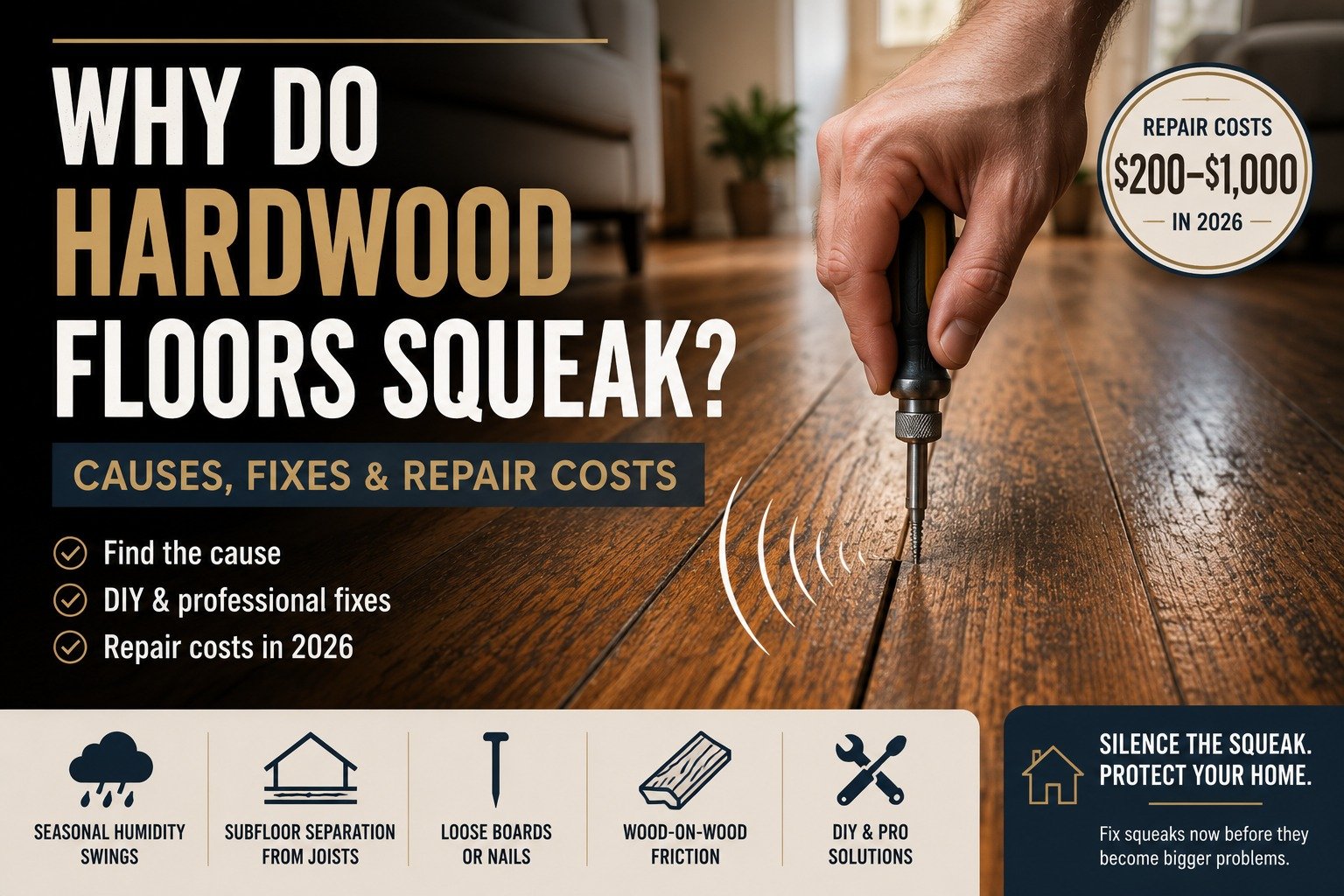
The 5 Most Common Causes of Squeaky Hardwood Floors
1. Seasonal humidity swings (the Kansas City special). Our metro sees indoor humidity drop below 30% in winter and climb past 60% in summer. Wood boards shrink and swell with those swings, loosening fasteners and opening gaps between boards. This is why many local homeowners notice squeaks appear in January and quiet down in July. Keeping indoor humidity between 35–55% year-round — the same advice in our guide to maintaining hardwood floors during Kansas winters — prevents most seasonal squeaks.
2. Subfloor separation from joists. When the plywood or OSB subfloor lifts away from the floor joists, every step flexes the gap and the wood creaks. This is the most common cause of deep, broad squeaks that you can feel as slight movement underfoot.
3. Loose or worn floorboards. Individual boards work themselves loose from the subfloor over decades of traffic. The squeak here is higher-pitched and localized to one or two boards.
4. Nails rubbing on wood. Older Kansas City homes with nail-down floors (common pre-1990) develop “nail pops” — the board slides up and down a loose nail shaft, producing a sharp chirp.
5. Improper installation. Insufficient fasteners, skipped subfloor adhesive, no expansion gap at the walls, or flooring installed before it acclimated. If a newer floor squeaks within its first couple of years, installation is the prime suspect.
Are Squeaky Floors a Structural Problem?
Usually no — squeaks are an annoyance, not a hazard. But call a professional promptly if you notice any of these alongside the squeaking:
– Visible sagging or sloping in the floor
– Boards that feel spongy or soft underfoot
– Squeaks accompanied by cupping, buckling, or gaps between boards
– Squeaking that appeared after a leak or flooding
These can signal joist damage, subfloor rot, or moisture problems — issues that grow more expensive the longer they wait. Our floor repair service starts with an inspection to rule out structural causes before treating the squeak itself.
How to Fix Squeaky Hardwood Floors: DIY Options
If your squeak is minor and localized, try these in order:
Step 1 — Find the exact squeak. Have someone walk the floor while you listen (from the basement below, if it’s accessible). Mark each squeak with painter’s tape.
Step 2 — Dust the seams with powdered graphite or talcum powder. For board-on-board rubbing, work powder into the seams and walk it in. This silences friction squeaks — often for a season or two.
Step 3 — Shim from below (if accessible). If you can see the subfloor from the basement, tap a thin wood shim with carpenter’s glue into the gap between joist and subfloor. Don’t force it — you’ll lift the floor.
Step 4 — Use a squeak-repair kit from above. Kits like Squeeeek-No-More drive scored screws through the flooring into the joist, then snap the head off below the surface. Effective, but you need to hit the joist.
Step 5 — Screw the subfloor to the joist. For accessible squeaks, a short screw driven at an angle through subfloor into joist (from below) is the permanent fix.
When to Call a Professional
DIY fixes handle friction squeaks and single loose spots. Call a pro when:
– Squeaks cover a whole room or multiple rooms
– There’s no basement or crawlspace access and repairs must happen from above without visible damage
– The floor is finished hardwood you don’t want scarred — driving screws through a stained-and-finished board without leaving a trace is genuinely difficult
– The squeak returns every season despite repairs
– The floor is older and also due for cosmetic work — if boards need to come up anyway, it’s often smart to combine squeak repair with hardwood floor refinishing in one project (see what refinishing costs, and when replacing makes more sense])
Squeaky Floor Repair Cost in 2026
| Repair Scenario | Typical Cost |
|---|---|
| DIY (graphite, shims, repair kit) | $10 – $60 in materials |
| Single squeak spot, accessible from below | $100 – $300 |
| One room, professional repair | $200 – $1,000 |
| Squeaks + board replacement | $450 – $1,700 |
| Whole-floor refastening with refinish | $2,000 – $6,000+ |
Two factors drive the price more than anything else: accessibility (an unfinished basement below the squeak makes repair fast and cheap; a finished ceiling or second-story floor means working from above) and scope (one board vs an entire room of loosened subfloor). Hardwood repair pros in the KC metro typically charge $65–$100 per hour.
How to Prevent Squeaks from Coming Back
– Run a humidifier in winter and A/C or dehumidifier in summer. Stable 35–55% indoor humidity is the single best squeak prevention there is — our seasonal hardwood maintenance guide covers the full routine.
– Fix small squeaks early. A loose board grinds against its fasteners with every step, wearing the hole wider.
– Choose the right floor for the space. Solid hardwood moves more with humidity than engineered hardwood — one reason engineered is often the better pick for Kansas City basements and slab foundations.
– Insist on proper installation. Adhesive plus fasteners, acclimated wood, and correct expansion gaps — quality hardwood flooring installation] prevents the squeaks that shortcuts cause.
Get Your Squeaky Floors Fixed — Without Tearing Them Up
Star Flooring repairs squeaky hardwood, laminate, and LVP floors across the Kansas City metro, including Lenexa, Overland Park, Olathe, Leawood, and Lee’s Summit. Most single-room squeak repairs are done in a few hours. Contact us for a free assessment or call +1 (816) 934-1016.
Frequently Asked Questions
Why is my floor squeaking all of a sudden?
Sudden squeaks usually follow a humidity change — most often when winter heating dries your home and wood shrinks, loosening boards and fasteners. If a sudden squeak follows a leak, appliance overflow, or storm, have it inspected for moisture damage.
How much does it cost to fix squeaky hardwood floors?
Professional squeaky floor repair costs $200 to $1,000 per room in 2026. A single accessible squeak may cost $100–$300, while severe cases involving board replacement run $450–$1,700 or more.
Can I fix squeaky floors without removing the flooring?
Yes, in most cases. If a basement or crawlspace gives access below, squeaks can be fixed with shims and screws without touching the finished floor. From above, breakaway-screw kits and specialized fasteners repair squeaks with nearly invisible results.
Do squeaky floors mean termites or structural damage?
Rarely. Most squeaks are simple friction from loose boards or subfloor gaps. But squeaking combined with sagging, soft spots, or visible damage warrants a professional inspection to rule out joist, rot, or pest problems.
Are squeaky floors bad for resale value?
Squeaks won’t show up on paper, but they’re one of the first things buyers notice during a showing — and they can create the impression of a poorly maintained home. Fixing them is one of the cheapest pre-listing improvements available.
Leave A Comment