
Luxury vinyl plank (LVP) flooring costs $5 to $9 per square foot installed in the Kansas City metro in 2026 — materials and labor included. For a typical 1,000 sq ft project, that’s $5,000 to $9,000 total. That makes LVP roughly 25–40% cheaper than hardwood flooring, which runs $6 to $12 per square foot installed in Kansas City, while handling moisture, pets, and kids better than almost any other floor.
Here’s exactly where that money goes, what pushes a quote up or down, and how to budget your project room by room.
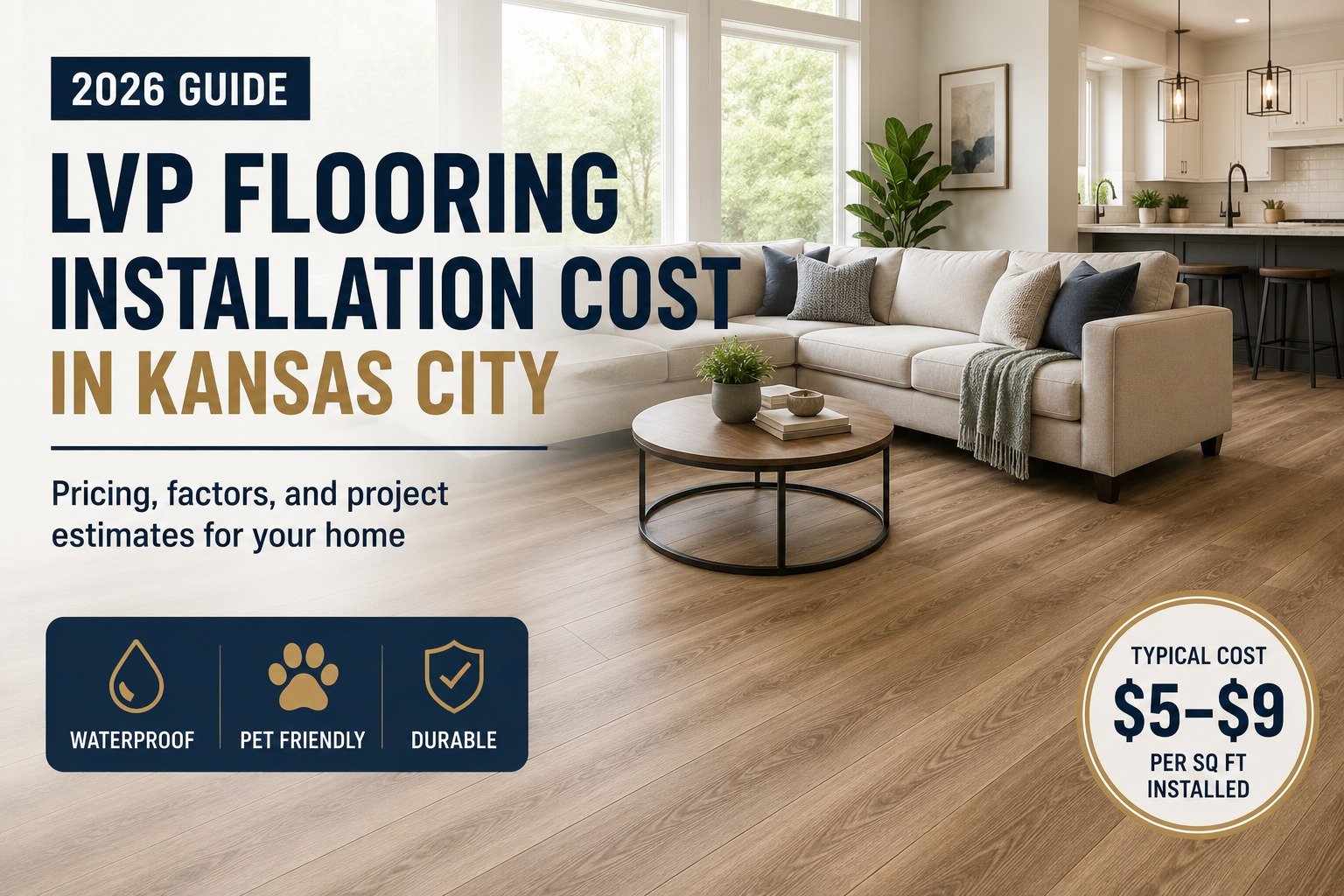
LVP Installation Cost Breakdown (Kansas City Metro, 2026)
| Cost Component | Price per Sq Ft | Notes |
|---|---|---|
| LVP materials (standard) | $2 – $4 | 12–20 mil wear layer, good for most homes |
| LVP materials (premium) | $5 – $7 | 20–28 mil wear layer, realistic wood texture, longer warranty |
| Professional labor | $2 – $4 | Click-lock floating installation |
| Old flooring removal | $0.50 – $2 | Carpet is cheapest to remove; glued vinyl or tile costs more |
| Subfloor prep/leveling | $0.50 – $2 | Only if needed — common in homes built before 1990 |
| Total installed | $5 – $9 | Most Kansas City projects land at $6–$7/sq ft |
Nationally, LVP runs $4 to $16 per square foot installed, but Kansas City labor rates sit below coastal markets — which is why most local quotes land in the $5–$9 range.
What Does LVP Cost by Project Size?
| Project Size | Typical Space | Estimated Total (Installed) |
|---|---|---|
| 200 sq ft | Bathroom + laundry | $1,000 – $1,800 |
| 500 sq ft | Kitchen + dining | $2,500 – $4,500 |
| 1,000 sq ft | Main living level | $5,000 – $9,000 |
| 1,500 sq ft | Whole main floor | $7,500 – $13,500 |
| 2,000 sq ft | Full home | $10,000 – $18,000 |
Larger projects usually get a better per-square-foot rate because setup, delivery, and haul-away costs spread across more flooring.
5 Factors That Change Your LVP Quote
1. Wear layer thickness. The wear layer — measured in mils — is what determines how long your floor survives dogs, kids, and furniture. A 12-mil floor is fine for a guest bedroom; a kitchen or entryway in a busy household should get 20 mil or more. Going from 12 to 22 mil typically adds $1.50–$3 per square foot in material cost but can double the floor’s usable life.
2. Subfloor condition. LVP is thin (usually 4–8 mm), so it telegraphs every dip and hump in the subfloor. Homes in older Kansas City neighborhoods — Prairie Village, Waldo, downtown Overland Park — often need $0.50–$2 per square foot of leveling before planks go down. Skipping this step is the #1 cause of failed click-lock joints.
3. Removal of existing flooring. Pulling carpet is quick. Demoing glued-down vinyl, old parquet, or ceramic tile is slow and adds real labor cost. If you’re replacing damaged planks rather than a whole floor, LVP floor repair is often the smarter, cheaper route.
4. Stairs and transitions. Stairs are priced separately — usually $40–$100 per step for LVP with matching stair nosing. Lots of doorways, angles, and transitions to tile or hardwood also add labor time.
5. Basement installations. Good news for Kansas City homeowners: LVP is 100% waterproof, making it one of the few floors we recommend below grade. Basements may need a moisture barrier ($0.30–$0.50/sq ft), but you skip the acclimation and humidity concerns that come with wood — a real advantage given how hard Midwest humidity swings are on the wrong flooring.
LVP vs Other Flooring: Installed Cost in Kansas City (2026)
| Flooring Type | Installed Cost/Sq Ft | Waterproof? | Typical Lifespan |
|---|---|---|---|
| Luxury vinyl plank | $5 – $9 | Yes | 15 – 25 years |
| Laminate | $4 – $8 | Water-resistant only | 15 – 25 years |
| Engineered hardwood | $7 – $13 | No | 20 – 40 years |
| Solid hardwood | $6 – $12 | No | 50 – 100 years |
| Carpet | $3 – $6 | No | 8 – 10 years |
If you’re weighing LVP against its two closest competitors, we’ve covered both matchups in detail: LVP vs laminate and LVP vs hardwood. The short version: LVP wins on moisture, hardwood wins on resale value and lifespan.
How Long Does LVP Installation Take?
Most LVP installations take 1 to 3 days:
– 200–500 sq ft: 1 day
– 500–1,200 sq ft: 1–2 days
– 1,200–2,000+ sq ft: 2–3 days
Unlike hardwood, LVP needs little to no acclimation time and produces no sanding dust or finish fumes — you can walk on it the same day it’s installed. Furniture can go back the next morning.
Is LVP Worth It for Kansas City Homes?
For most households, yes — especially if any of these apply:
– You have pets or kids. LVP topped our list of best flooring options for homes with pets and kids for a reason: it shrugs off claws, spills, and dropped sippy cups.
– You’re flooring a kitchen, bathroom, or basement. Waterproof means waterproof.
– You want the wood look without the wood budget. Modern premium LVP is convincing enough that most guests can’t tell the difference underfoot.
One honest caveat: in higher-end Johnson County neighborhoods, buyers still expect real hardwood in main living areas, and the right flooring choice does affect resale value. A common strategy we install for clients: hardwood in living and dining spaces, LVP in kitchens, baths, basements, and mudrooms.
Get an Exact LVP Quote for Your Home
Online estimates get you in the ballpark — your subfloor, layout, and material choice decide the real number. Star Flooring provides free in-home measurements and quotes across the Kansas City metro, including Overland Park, Lenexa, Olathe, Leawood, and Lee’s Summit. Learn more about our luxury vinyl plank installation service or contact us to schedule your estimate — call +1 (816) 934-1016.
Frequently Asked Questions
How much does it cost to install 1,000 square feet of LVP?
In the Kansas City metro, expect $5,000 to $9,000 installed for 1,000 sq ft of LVP in 2026, including materials, labor, and standard prep. Premium wear layers, extensive subfloor leveling, or tile removal can push the total higher.
Is it cheaper to install LVP or laminate?
Laminate is slightly cheaper — typically $4–$8 per sq ft installed vs $5–$9 for LVP. But LVP is fully waterproof while laminate is only water-resistant, so LVP is usually worth the difference in kitchens, bathrooms, and basements.
Can LVP be installed over existing flooring?
Often yes. LVP can float over vinyl, tile, and hardwood if the surface is flat, clean, and structurally sound. It should not go over carpet, and badly uneven surfaces need leveling first. A pro will check flatness before quoting.
What wear layer thickness should I choose?
For bedrooms and low-traffic rooms, 12 mil is adequate. For kitchens, entryways, and homes with pets or kids, choose 20 mil or higher. Commercial spaces should use 28 mil.
How long does LVP flooring last?
Quality LVP lasts 15–25 years in residential use. Wear layer thickness, installation quality, and subfloor prep are the biggest factors in lifespan.
Leave A Comment